
5 Pillars of Islam: A Complete Guide to the Five Pillars of Islam
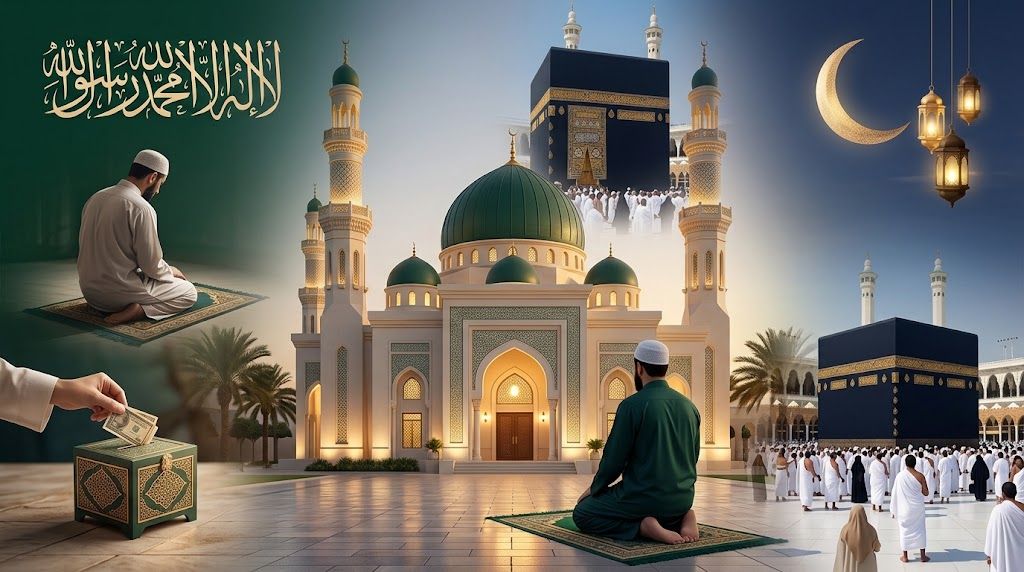
What Are the 5 Pillars of Islam?
The 5 Pillars of Islam are the five fundamental acts of worship and practices that form the foundation of a Muslim’s faith and religious life.
The Five Pillars are:
Shahada – Declaration of Faith
Salah – Prayer
Zakat – Charity
Sawm – Fasting
Hajj – Pilgrimage
Together, these pillars help Muslims strengthen their relationship with Allah, develop discipline, practice compassion, and live according to Islamic teachings.
1. Shahada – Declaration of Faith
Shahada is the first pillar of Islam. It is the declaration of faith and the foundation of Islamic belief.
The Shahada affirms that there is no deity worthy of worship except Allah and that Muhammad ﷺ is the Messenger of Allah.
Faith in Allah and acceptance of His Messenger are at the heart of Islam. The Shahada is therefore considered the foundation upon which the other pillars are built.
2. Salah – Prayer
Salah, or the five daily prayers, is the second pillar of Islam.
Muslims are required to perform five daily prayers:
Fajr – Dawn prayer
Dhuhr – Noon prayer
Asr – Afternoon prayer
Maghrib – Sunset prayer
Isha – Night prayer
Prayer gives Muslims regular opportunities throughout the day to remember Allah, seek His guidance, and express their devotion.
Salah also teaches discipline, consistency, humility, and mindfulness of Allah.
3. Zakat – Charity
Zakat is the third pillar of Islam. It is a form of obligatory charity required from Muslims who meet the relevant conditions, including the required level of qualifying wealth.
Zakat helps support eligible people in need and encourages Muslims to use their wealth responsibly.
Beyond financial giving, Zakat promotes compassion, generosity, social responsibility, and concern for others.
The rules concerning Zakat, including the calculation of qualifying wealth and eligibility, can be detailed. Muslims should consult a qualified Islamic scholar for guidance regarding their individual circumstances.
4. Sawm – Fasting During Ramadan
Sawm, or fasting, is the fourth pillar of Islam.
During the month of Ramadan, Muslims fast from dawn until sunset, abstaining from food, drink, and other things that invalidate the fast.
Fasting is not simply about avoiding food and drink. It is also an opportunity to develop taqwa (God-consciousness), patience, self-control, gratitude, and devotion to Allah.
Ramadan is also a time when Muslims are encouraged to increase prayer, read the Quran, give charity, make dua, and help others.
5. Hajj – Pilgrimage to Makkah
Hajj is the fifth pillar of Islam. It is the pilgrimage to the Holy Kaaba in Makkah.
Hajj is obligatory once in a lifetime for Muslims who have the physical and financial ability to undertake it and meet the relevant Islamic conditions.
During Hajj, Muslims from around the world gather to perform specific acts of worship. The pilgrimage represents unity, equality, sacrifice, obedience, and devotion to Allah.
The Hajj also demonstrates the global unity of the Muslim community, as Muslims from different backgrounds stand together in worship.
Why Are the 5 Pillars of Islam Important?
The Five Pillars of Islam provide a framework for a Muslim's religious life.
Each pillar has a distinct role:
Shahada establishes faith.
Salah maintains a regular connection with Allah.
Zakat encourages generosity and social responsibility.
Sawm develops patience and God-consciousness.
Hajj demonstrates unity, devotion, and obedience.
Together, these pillars help Muslims build a life centered on faith, worship, good character, and responsibility toward others.
5 Pillars of Islam at a Glance
Pillar
Meaning
Main Purpose
Shahada
Declaration of Faith
Establishing Islamic belief
Salah
Prayer
Daily worship and remembrance of Allah
Zakat
Obligatory Charity
Supporting eligible people in need
Sawm
Fasting
Developing patience and God-consciousness
Hajj
Pilgrimage
Worship, unity, and devotion
Frequently Asked Questions About the 5 Pillars of Islam
What are the 5 Pillars of Islam?
The Five Pillars of Islam are Shahada, Salah, Zakat, Sawm, and Hajj. They are the fundamental practices that form the foundation of Islamic religious life.
What is the first Pillar of Islam?
The first Pillar of Islam is Shahada, the declaration of faith in the oneness of Allah and the prophethood of Muhammad ﷺ.
How many daily prayers are there in Islam?
Muslims perform five daily prayers: Fajr, Dhuhr, Asr, Maghrib, and Isha.
What is Zakat in Islam?
Zakat is an obligatory form of charity for Muslims who meet the relevant Islamic conditions. It helps eligible people in need and encourages responsible use of wealth.
Which Pillar of Islam is fasting?
Sawm, or fasting, is the fourth Pillar of Islam. The obligatory fasts of Ramadan are an important part of Islamic worship.
Which is the fifth Pillar of Islam?
Hajj, the pilgrimage to Makkah, is the fifth Pillar of Islam. It is obligatory once in a lifetime for Muslims who are physically and financially able to perform it and meet the relevant conditions.
Conclusion
The 5 Pillars of Islam are the foundation of Islamic religious practice. Shahada establishes faith, Salah creates a regular connection with Allah, Zakat encourages generosity, Sawm develops patience and God-consciousness, and Hajj represents devotion and unity.
Understanding the Five Pillars is an important first step toward understanding the core practices and values of Islam.